
By Claire Regnault, Te Papa's Senior Curator, NZ Culture and History
On 10 December 2024, Winston Peters, the then Deputy Prime Minister and Minister of Racing, announced the Government’s decision to shut-down the greyhound racing industry, following a twenty-month transition period. With the industry’s imminent closure, rehoming organisations are focusing on finding new homes for over 2000 retired greyhounds.
An ancient breed, the first greyhound to set their paws on New Zealand came aboard the Endeavour in 1769. It belonged to the ship’s botanist Joseph Banks, who used the hound to hunt small game during the voyage. Greyhounds are a type of sighthound which are known for their distinctive hunting style. Rather than hunting by scent, their hunt style relies on their extraordinary sense of sight, speed and ability to out manoeuvre and catch fast moving prey.
This characteristic is demonstrated in a study of a hound chasing a hare by George Stubbs, an English artist who specialised in painting animals and excelled at anatomy. Stubb’s expertly captures the greyhound’s flexible muscular body with its deep chest, narrow waist and long pointed muzzle, along with the excitement of the chase.


Hunting
Greyhounds were first introduced to New Zealand in the 1870s as hunting dogs following Governor Grey’s disastrous introduction of hares into the country in 1868. Released as ‘hunting quarry’, the hares quickly multiplied and became pests for farmers.


The introduction of coursing
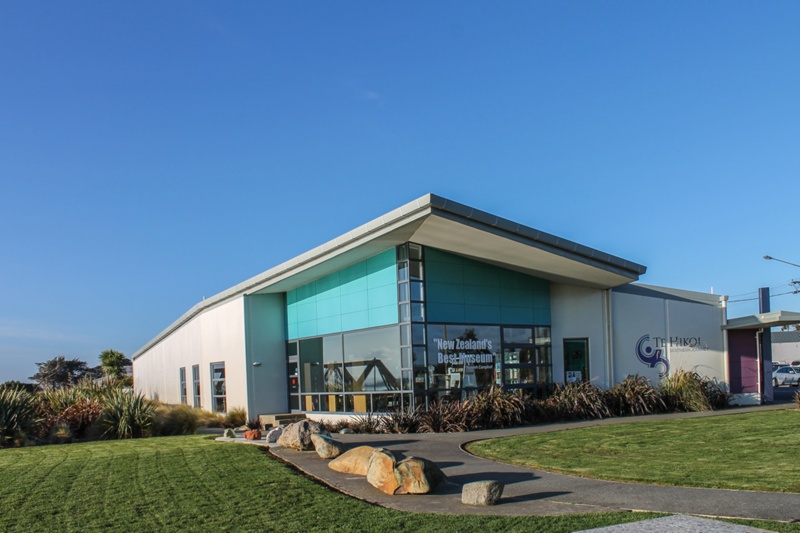
While using greyhounds to hunt for rabbits, farmers also participated in coursing, a sport, popularised in the sixteenth century in England, which involved the release of two dogs at a time to pursue a live hare. A person known as the ‘slipper’ released the hounds at the same time when the hare was within 100 yards of sight. The hounds gained points by outracing each other, catching up with the hare, for making it turn, tripping it, and for a kill. In order to ensure that the hounds were released at exactly the same time, a two collared slip lead was used.(1) This slip lead is from Te Hikoi Museum in Southland, where the first country’s coursing clubs were formed in 1876.


The slip comprises of two collars attached to a 'Y' shaped bar, which in turn is attached to a long leather leash. A thin rope runs the length of the leash. When the rope is pulled the ring lifts a bar which releases one side of each collar, thereby releasing both hounds simultaneously. You can see a demonstration here: https://www.youtube.com/watch?v=-W4wrKLqjkc


Professional racer
Coursing was outlawed in New Zealand in 1954, on the grounds of cruelty to the hares. Greyhound racing, which had begun in New Zealand in 1934 following the importation of a ‘drag hare’ or mechanical lure, took over from coursing. The first greyhound racing track opened in California in the US in 1919. It was introduced into England in 1926 along with the oval track and mechanical hare. (2) Races were typically run by six to eight hounds, who can reach a speed of about 72 km.
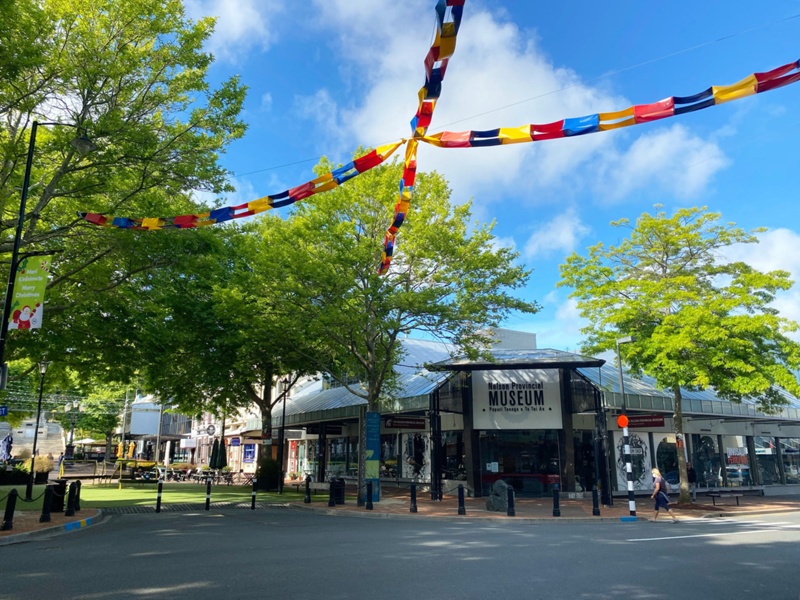
The growing popularity of greyhound racing inspired the production of several parlour games, including this board game from the Nelson Museum from 1930. The cover art shows the hounds wearing different coloured vests. These equate to the hounds starting position or ‘trap’, and ensure that officials, spectators and betters can identify each hound. (3)


This poster by the Bendell Bayley studio was issued by Britain’s Ministry of War Transport around 1940. The campaign used a range of popular English sports to emphasise the importance of speed and efficiency during the war. In the poster, the hound expertly turns the hare, even though its mechanical.


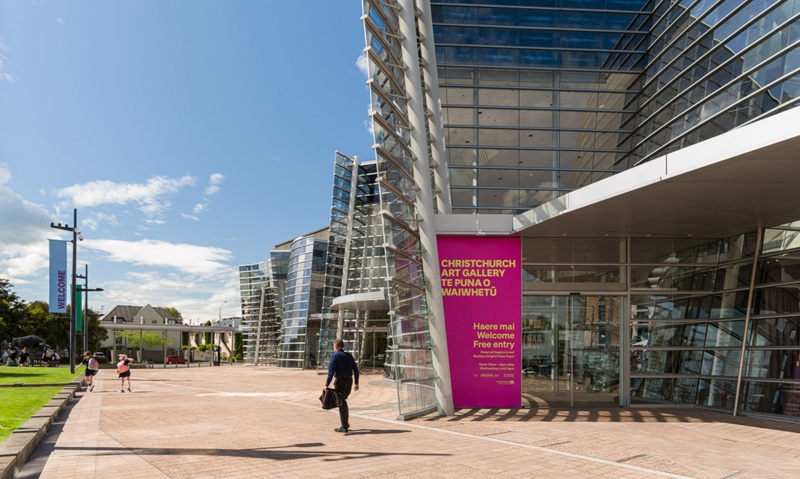
In the 1960s, when Greer Twiss was working on a series of sculptures inspired by athletes, ‘their muscles straining as they undertook feats of strength and speed’, he also turned his attention to greyhounds. In this sculpture he superbly captures ‘the fluid muscularity of running dogs, seen both as individuals and as a molten, surging pack .’ (4) To see them as Twiss did running as a pack and almost becoming one is an exhilarating sight.


A betting man’s game
1970 marked a major milestone for greyhound racing in New Zealand. After much lobbying from racing enthusiasts, the Gambling Act of 1908 was amended to include greyhound racing which meant that it became legal to bet on the dogs (5). The sport’s profile also received a major boost due to the arrival of Prince Philip, whose greyhound, Camira Flash, had won the 1968 English Greyhound Derby. During the 1970 Royal Tour, the Auckland Greyhound Racing Club presented Prince Philip with a female greyhound called Royal Commission. Prince Philip accepted the hound but declared that she would stay in New Zealand. Her winnings were donated to the New Zealand arm of the Duke of Edinburgh Award Scheme. (6)
The club also named an annual race after the prince - the Duke of Edinburgh Silver Collar. The trophy is in the form of a solid silver collar. Royal Commission finished second in the first race but won the silver collar in 1972.
Greyhound racing reached another milestone in 1981, when greyhound clubs gained full access to off-course betting through the TAB. The advent of Trackside Television in 1992, enabled people to watch and bet from home. (7)
In popular culture
While there have been many famous greyhounds on the track, in popular culture Bitzter Maloney ‘all skinny and boney’ is probably the most widely known greyhound (or at least part greyhound) across the country. Bitzer Maloney is a character from Lynley Dodd’s much loved children’s book Hairy Maclary from Donaldson's Dairy which was first published in 1983. Dodd’s Hairy Maclary series, which follows the exploits of a rag-tag gang of dogs, remains a firm favourite with children around the world, as a TV show and book series.


The closure of the industry
The New Zealand greyhound racing industry came under increasing scrutiny in the 2000s with growing concerns around animal welfare. Following a series of reports into greyhound racing, including a 2017 inquiry which found that more than 1400 dogs were euthanised in four years, the industry was formally put on notice in 2021. The Racing Minister at the time, Grant Robertson, commented that if the issues raised in the reports could not ‘be remedied, then the industry will cease to have a social license.’ This was followed by Peters’ 2024 announcement, and on 13 October 2025, the Racing Industry (Closure of Greyhound Racing Industry) Amendment Bill was introduced to the House. (8)
Greyhounds as pets
In 2006 Greyhound Racing New Zealand founded a greyhound adoption programme known as Greyhounds as Pets. The goal of the programme is to change the public perception of greyhounds, showing that despite their reputation for hunting and speed, they make quiet, couch-loving pets. Most greyhounds retire around the age of four. In 2018 they established the Great Mates Rehoming Programme to help prepare retired racers, who have often never come across other dogs, lived in homes, walked up or down stairs, for their new lives as pets. (9) With the industry closing, GAP have intensified their adoption drive. In September 2025, greyhounds took to the catwalk at New Zealand Fashion Week flaunting by a range of designers including Karen Walker, Sylvester, Trelise Cooper, Swandri, Nom*D and Bendon.In December, GAP launched the Greathounds campaign, promoting greyhounds as great family pets, friends, sleepers and walkers, including one featuring TV’s most famous greyhound, Santa’s Little Helper, from The Simpsons. As a greyhound owner, I can testify that they do make great pets, and agree with Imogen Mallia-Valjan, a curator at the NGV in Melbourne, who has beautifully observed ‘Those of us who find ourselves graced with the presence of such gentle and historically anchored dogs walk with one foot in the present and one in the past’. (10)


References
1. https://www.thecoursingmuseum.com/coursing/2. https://www.nzgeo.com/stories/greyhound-racing/
3. https://oxford-stadium.co.uk/blog/british-greyhound-racing-color-assignments/
4. Greyhounds Racing | Christchurch Art Gallery Te Puna o Waiwhetū
5. https://www.nzgeo.com/stories/greyhound-racing/
6. https://greyhounds.co.nz/an-offer-to-gift-a-greyhound/
7. Mary Mountier, Horse and greyhound racing – Greyhound racing, Te Ara – the Encyclopedia of New Zealand, https://teara.govt.nz/en/horse-and-greyhound-racing/page-10 (accessed 15 January 2026). https://teara.govt.nz/en/horse-and-greyhound-racing/page-10
8. https://www.dia.govt.nz/resource-material-our-policy-advice-areas-racing-policy
9. https://www.greytmates.co.nz/greyhound-history
10. Cats & Dogs in Art & Design (NGV, 2025), p. 111